Agenda militant
Ailleurs sur le Web
![[RSS]](images/rss.jpg "S’abonner au flux RSS")
- Edouard Geffray loupe son opération de communication devant le lycée Pauline Rolland à Chevilly-Larue (10/10)
- Dans le chaudron de la Bastille, par LD. Et quelques documents. (10/10)
- Décès du très grand économiste marxiste Anwar Shaikh (09/10)
- Un « marxisme militant » à la Libération (09/10)
- Henri Maler – In memoriam (09/10)
- Motion votée par une quinzaine d’AG pour manifester vers Matignon mardi 13 octobre (08/10)
- Les syndicats enseignants appellent à converger avec les lycéens ce jeudi (07/10)
- Manuel Bompard, invité de C à vous (06/10)
- Un deuxième épisode du podcast « Internationalistes », avec Catherine Samary et Pierre Rousset (06/10)
- Le roman prolétarien, un roman de classe ? (06/10)
- De la révolte intacte à l’utopie nécessaire : hommage à Henri Maler (06/10)
- Lycées : mobilisation historique, répression historique (06/10)
- "Dans la police, on ne balance pas" : Valentin Gendrot raconte son infiltration (06/10)
- Provocation à l’université : des CRS envahissent la Sorbonne (05/10)
- France Info "peine à entendre" les revendications des lycéens (05/10)
- A France Télévisions, la colère de journalistes sur la couverture du mouvement lycéen (05/10)
- Mathilde Panot sur France Info lundi matin (05/10)
- "Vous condamnez les violences ??" - La grosse semaine de Pierre-Emmanuel Barré (05/10)
- Syndicat de la magistrature : Cessons de réprimer la jeunesse pour la faire taire (04/10)
- Jean-Yves Bériou nous a quittés… (04/10)
- Appel aux juifs·ves de France - 2027, quelle place pour nous ? (04/10)
- Appel de la Coordination lycéenne Paris - Banlieue (04/10)
- À Nantes, le mouvement lycéen n’est pas seul : maintenir la pression, éviter la répression (03/10)
- Décès du fondateur d’Acrimed, Henri Maler (03/10)
- Mélenchon: Le 6 octobre avec et en protection de la jeunesse (03/10)
Liens






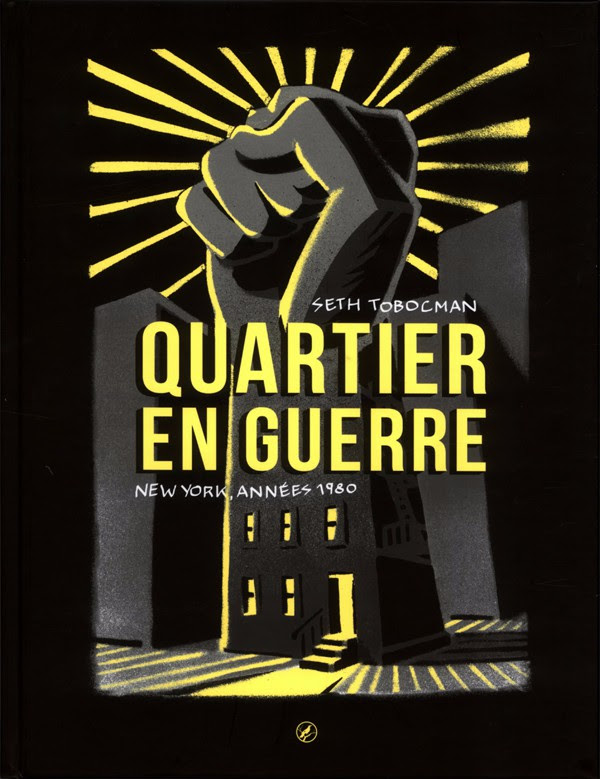
New York | Quartier en guerre
Lien publiée le 9 juillet 2017
Ces articles de la rubrique « Ailleurs sur le web » sont publiés à titre d'information et n'engagent pas la Tendance CLAIRE.
http://laboratoireurbanismeinsurrectionnel.blogspot.fr/2017/07/new-york-quartier-en-guerre.html
Seth Tobocman
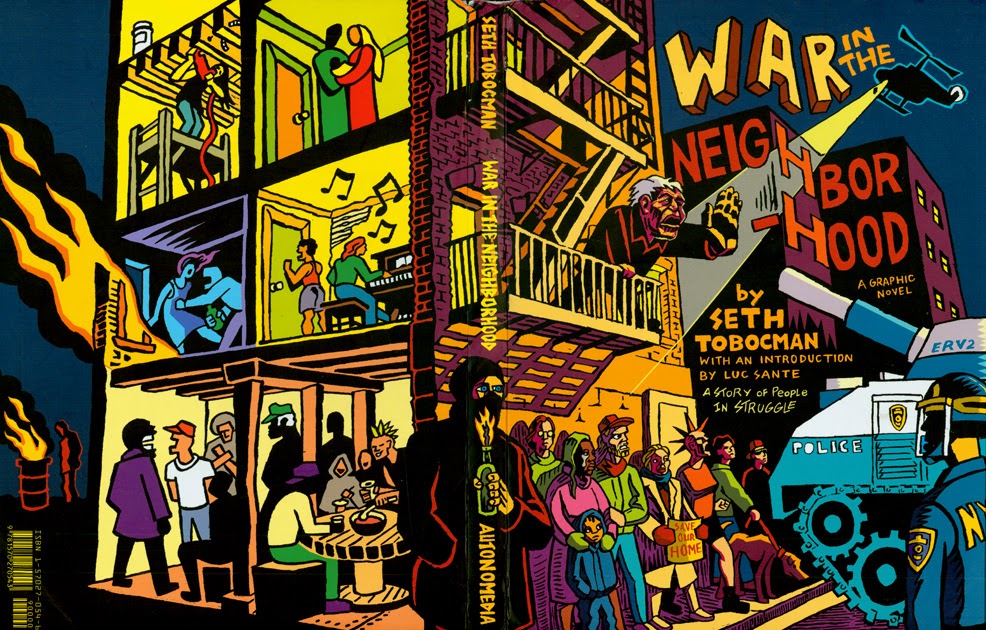
War in the Neighborhood
1999
Edité en français
par le Collectif des Métiers de l’Edition CMDE
Quartier en guerre
février 2017
http://editionscmde.org/livre/quartier-en-guerre
Note de l'éditeur :
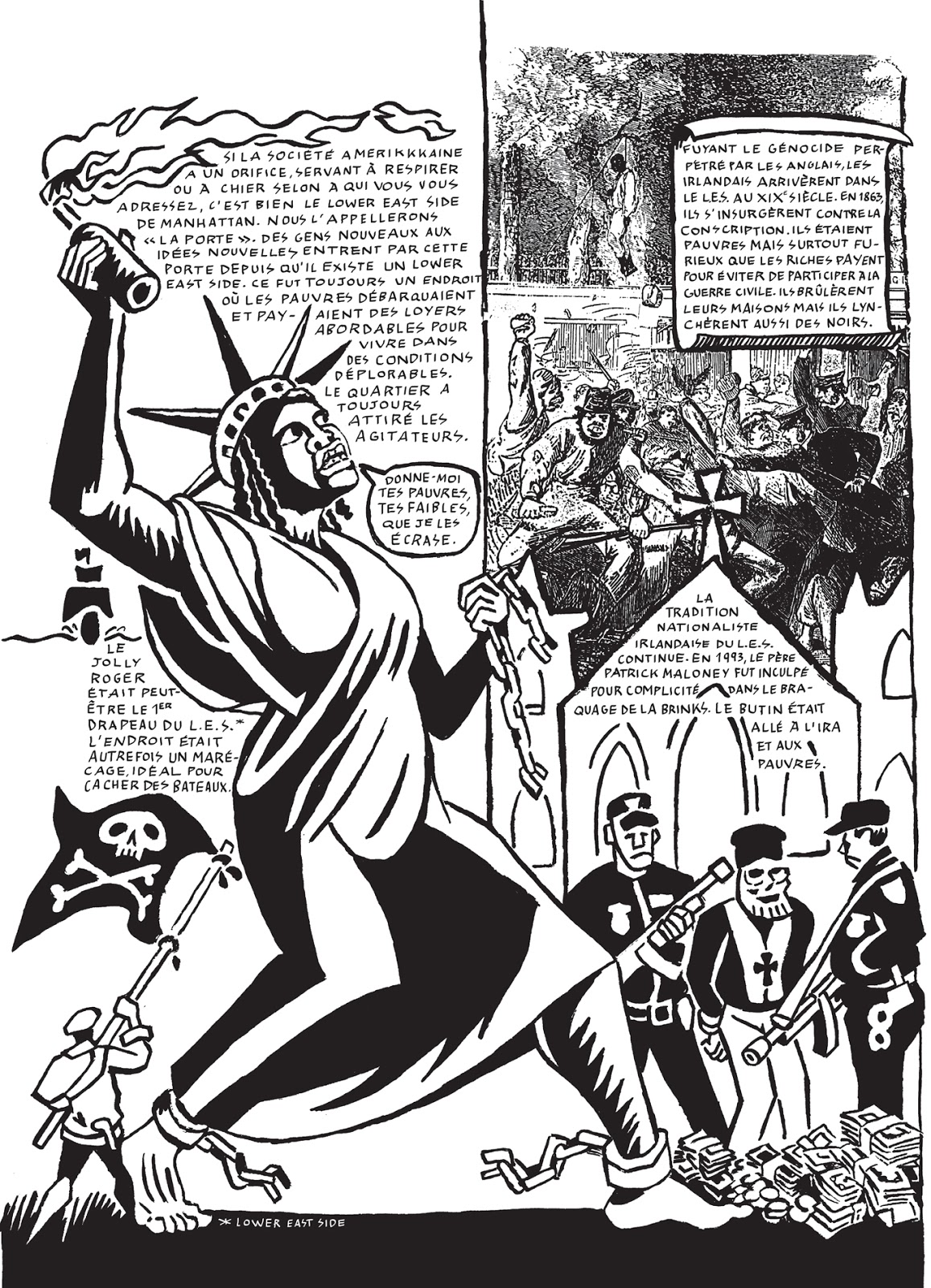
"Couvre-feu, violences policières, expulsions... Les politiques sécuritaires et la spéculation immobilière s’attaquent au quartier populaire du Lower East Side à Manhattan, au coeur des années Reagan. Ses habitants résistent : squats, manifestations sauvages, émeutes...
Ce roman graphique raconte une décennie de luttes par une succession de portraits où se croisent les vies tumultueuses d’immigrés, de sans-abri, de punks... des pauvres pour qui la solidarité et l’auto-organisation deviennent des armes.
Au plus fort de son art du reportage, Seth Tobocman signe un livre d’une rare finesse, écrit sur plus de dix ans, alors qu’il squattait lui-même à deux pas du centre mondial de la finance."
Seth Tobocman, compagnon de route de Peter Kuper et d’Eric Drooker, est un artiste majeur de la BD underground américaine. Il est l’auteur, entre autres, de You Don’t Have to Fuck People Over to Survive (AK Press), Landscapes and Disasters (AK Press), World War III Illustrated: An Anthology (PM Press) et de Len: A Lawyer in History (AK Press).
Présentation de l'auteur :
LOWER EAST SIDE POLITICS
I got my first real experience of political organizing when our landlord tried to impose an unjustified rent increase on our building. The residents formed a tenant union, went on rent strike, took the landlord to court and won many improvements.
I became aware of the Lower East side as a community in struggle.
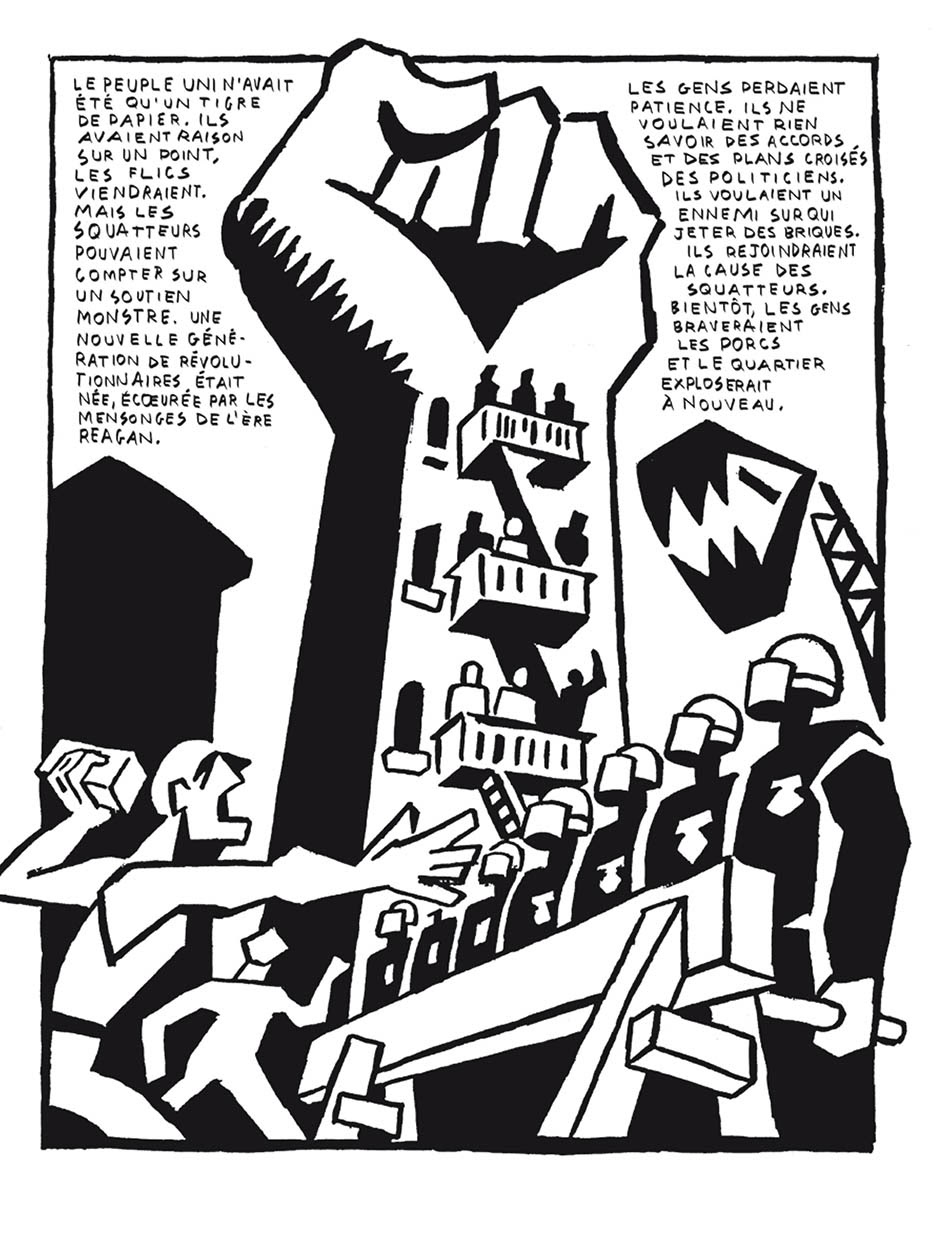
Mayor Koch had announced that ‚"New York is a city for winners" and threatened that poor people would be pushed into the east river. There were many initiatives launched topreserve the L.E.S.. as a place where working-class and middle class folks could afford to live. One of the most inspiring was the squatters movement.
In the 1980s hundreds of city owned abandoned buildings sat empty while people were freezing to death on the streets. The squatters broke into these buildings and turned them into low income housing. The squatters movement also tried to protect the rights of homeless people who lived in Tompkins Park.
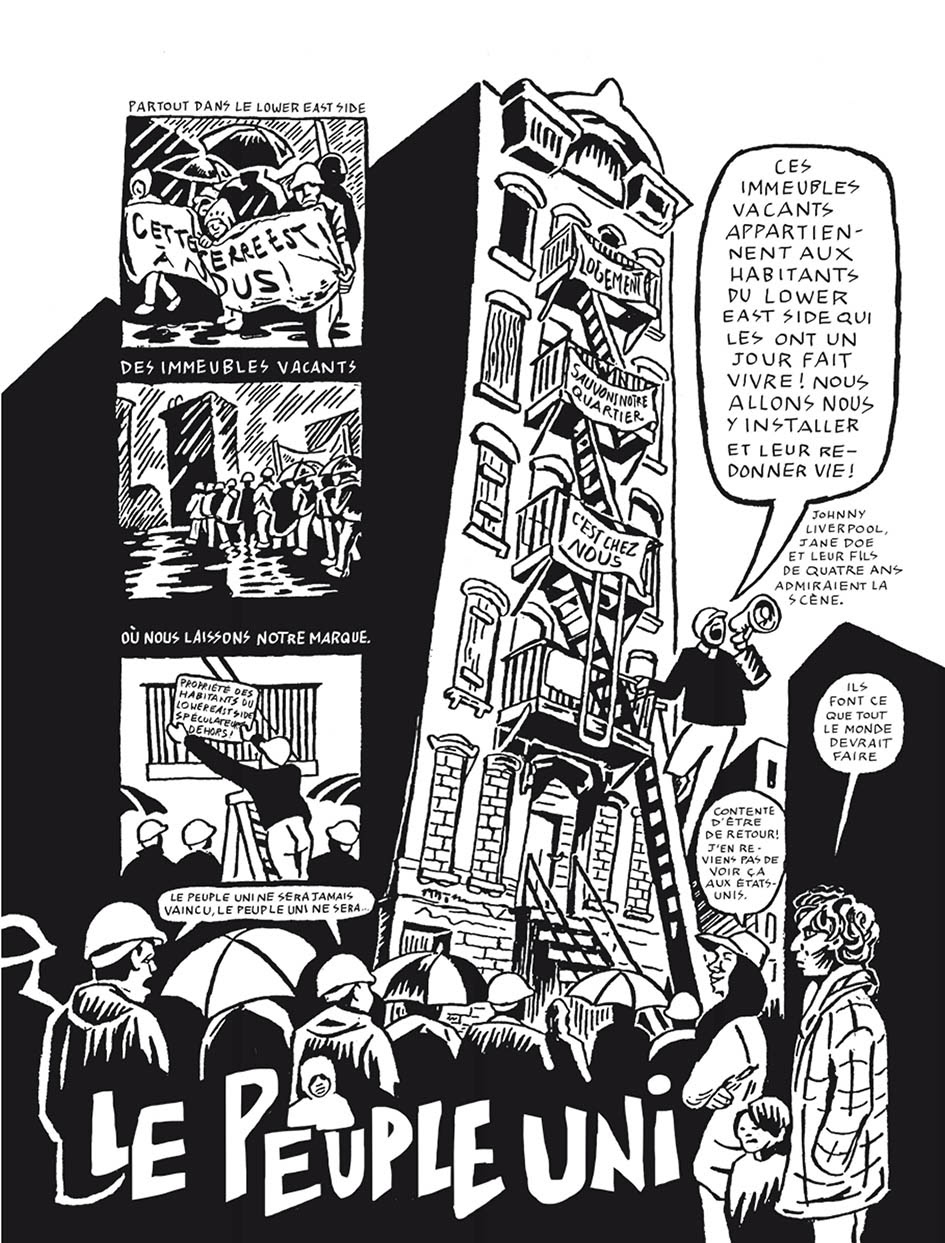
All of this activity led to an attempt by the city to crush the movement. But people fought back. From 1988 to 1992 there were a series of riots in the neighborhood. The Lower East Side became the focus of an international struggle for human rights.
I decided to get more involved and so I became a member of Umbrella House, a squat on Avenue C. I worked on renovating the building and ran a printing press on the first floor with the help of Sarah Hogarth. I was involved in defending the building against an eviction attempt, which got pretty hairy.
I also worked on defending the other squats and participated in lots of other protests. I was arrested about twenty times and convicted twice. Eventually my lawyer, Stanley Cohen, advised me to cool it. He said that the D.A. had justa bout had it with me and that if I continued the consequences would get serious.
At about this time I also began to fall out with my comrades at Umbrella House. We disagreed about a number of internal issues. I decided to give up my membership in the squat and return to life as a cartoonist who supports radical movements rather than a radical who occasionally draws cartoons.
My experiences in the squatters movement are the basis of my second book
WAR IN THE NEIGHBORHOOD.
http://www.sethtobocman.com/index.html